One of the most common problems faced by ceiling fan owners: my fan is wobbling, what do I do?
It is a common misconception that a fan will wobble because it is not properly mounted to the ceiling. While it is true that an improperly mounted fan can have more ability to move and therefore to wobble, if the blades are balanced the fan should not wobble regardless. For safety reasons be sure the fan is mounted properly, and then to eliminate the wobble, balance the blades.
There are three primary reasons a fan will go out of balance.
1. Bent blade bracket
2. Weight discrepancy
3. Warped blades
Observe the fan as it is operating from the side. Does one of the blades appear out of line with the rest? Very carefully bend it back into place, either it will be bent at a different pitch or too far up or down. Check to make sure all the blades are aligned (same distance from the ceiling) have the same pitch (look at the profile while it is running and see if any blade appears “wider” or “narrower” than the others and are not “out of clock” (look at the fan from below and be sure the blades are spaced evenly). Be careful when bending the blades/brackets as the brackets can snap very easily. For some standard fan designs you can also purchase a replacement bracket set.
This of course is if the reason it’s out of line is because one of the brackets has been bent out of shape. If one or more of the blades appears drooping or warped, that of course would also cause the fan to wobble. In that case you can either attempt to bend the bracket to compensate, try and arrange the blades so that any warping blades offset each other, or simply replace the blades. See our section on replacement blades for more information.
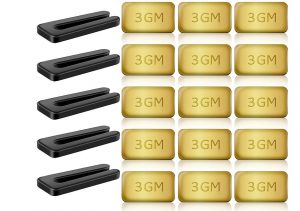
If the blade appear to be correctly in line perhaps there is a weight discrepancy among them. Try taping a quarter to the top of each blade, one at a time, and observe if the balance improves. You can also try switching adjacent blades in case of more than one blade being a different weight. Once you have determined the offending blade(s), glue the quarter (or other appropriate weight) in the most effective position.
