
If you own an Emerson ceiling fan, chances are it has outlived at least one other fan in your house, and that longevity is exactly why so many people end up here looking for a part rather than a replacement. Emerson has been building fans since the 1890s, and the ceiling fans carrying the name today still split into two very different engineering families: the heavier AC fans built around the K55 motor, and the newer DC fans sold under the Eco name with Emerson’s EcoMotor. Knowing which one you have changes almost everything about how you diagnose a problem, which remote or wall control will work, and whether a generic part from the hardware store is worth trying. This page walks through the models we get asked about most, the failures that actually show up on them, and where to go next for parts, manuals and wiring help.
Emerson also sits in an unusual spot in the market. The ceiling fan line stayed with Emerson Air Comfort Products when Emerson sold its broader motor business to Nidec in 2010, and more recent boxes and listings carry Luminance Brands packaging, so you may see the same fan described as an Emerson, an Emerson Air Comfort, or a Luminance product depending on when and where it was sold. The CF model numbers stayed consistent through all of that, which is good news when you are trying to match a remote, a blade set or a light kit to a fan that has been on the ceiling for fifteen years.
Finding the CF Number on Your Emerson Before You Order Anything
Every Emerson ceiling fan from the last few decades carries a model number that starts with CF, and that number is the single most useful thing you can have in hand before shopping for parts. It is printed on a label on top of the motor housing, which means you will usually need to lower the canopy or at least shine a flashlight between the canopy and the housing to read it. The digits identify the fan family, and the letters that follow identify the finish, so a CF955ORB is a Midway Eco in oil rubbed bronze while a CF955BS is the same fan in brushed steel. An L added after the digits, as in CF955L or CF205L, usually indicates a version with an integrated LED light. When you are searching for a replacement part, drop the finish letters first, because mechanical parts like receivers, capacitors and wall controls are shared across finishes, while blades, glass and light fixtures are the parts where the finish code actually matters. If the label is gone or unreadable, our ceiling fan manuals page can help you match the fan by its housing shape and control type, and the table below covers the Emerson models that come up most often in our inbox.
| Model | CF Number | Motor Type | Control It Shipped With | What to Know |
|---|---|---|---|---|
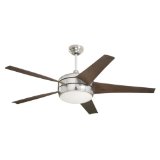 Midway Eco |
CF955 / CF955L | DC EcoMotor | 6-speed remote with receiver | 54 inch, rated around 17.5 watts on high with a 6,206 CFM rating. Receiver failures are the most common complaint. |

Carrera Grande Eco |
CF788 | DC EcoMotor | 6-speed wall control with receiver | Blade Select series fan offered in 44, 54, 60 and 72 inch spans. Uses under 30 watts. |
| Carrera Grande | CF787 | AC | 4-speed slide wall control | Same ventless housing as the Eco version but a conventional AC motor, so AC wall controls and capacitor diagnosis apply. |
| Penbrooke Select and Penbrooke Select Eco | CF5100 / CF5200 | AC / DC | Varies by kit | Two versions that look nearly identical. Confirm the number before ordering a control. |
| Premium Select | CF4801 | AC | Pull chain or optional control | A traditional Blade Select series fan. Long lifespan and still commonly found in older homes. |

Crown Select |
CF4501 | AC | Pull chain or optional control | Ornate housing popular in traditional rooms. Light kits and glass are the parts people chase most. |

Loft |
CF765 | AC | Pull chain or optional control | Industrial styling, frequently hung on longer downrods in lofts and vaulted rooms. |
| HighPointe | CF205 / CF205L | AC | Pull chain or optional control | Contemporary fan with a glass light. Glass and LED module replacements are common requests. |
| Luray Eco | CF860 | DC EcoMotor | Remote with receiver | Energy efficient DC fan. Follow the Eco receiver diagnosis below rather than AC capacitor advice. |
| Summer Night | CF652 | AC | Pull chain | A 52 inch fan that shows up often in older homes. Pull chain switches are the usual wear item. |
| Veranda | CF542 / CF552 | AC | Pull chain or optional control | 42 and 52 inch outdoor rated fans. Corrosion at the switch housing and light kit is the typical failure. |
Midway Eco CF955 and Other EcoMotor Fans That Suddenly Ignore the Remote
The Midway Eco is one of the most efficient fans Emerson ever sold, and it is also the fan that generates the most “my remote stopped working” emails, because the DC EcoMotor depends entirely on its receiver board to turn household AC into the controlled DC signal the motor needs. When that receiver fails, the fan does not slow down or hum the way an AC fan does; it usually just stops responding, or it responds intermittently, starting on one speed and then refusing further commands. Before you blame the receiver, rule out the simple things in order. Replace the remote battery with a fresh one from a new package, since the small 12 volt and coin cells used in these remotes drop off sharply near the end of their life and can still light the remote’s LED while being too weak to reach the fan. Then kill power at the breaker for a full minute and restore it, which resets the receiver and clears the stuck states that DC boards sometimes get into after a power flicker or a nearby lightning strike. Most Emerson Eco receivers also have a pairing or learning procedure that is done in the first minute after power is restored, and a fan that lost its pairing will look exactly like a dead receiver until you run it; the exact button sequence is in the owner’s manual for your CF number, and our guide to troubleshooting ceiling fan remote controls covers the general logic if your manual is long gone.
If fresh batteries, a breaker reset and a re-pairing attempt do not bring it back, and especially if the fan clicks or twitches when power is restored but never gets to speed, the receiver is the likely culprit. This is the point where DC fan owners need to be careful, because the universal receivers sold for AC fans will not run an EcoMotor and can damage it. A DC fan needs the matching Emerson Eco receiver and remote set for that motor, which is why we always tell people to look up the exact CF number first. If a matching receiver is no longer available new, a used Midway Eco or Luray Eco donor fan is often the most practical source, and our page on buying used ceiling fans explains what to check before paying for one. For a broader look at how remotes and receivers pair across brands, the remote control ceiling fans overview is a good companion to this section.
When a K55-Powered Premium Select or Carrera Grande Hums but Won’t Spin
The AC side of the Emerson line behaves like a classic ceiling fan, and the K55 motor in particular was Emerson’s heavy duty power and performance motor, used in fans that were marketed on airflow and durability. Those motors rarely burn out on their own. When an AC Emerson like the CF4801 Premium Select, the CF787 Carrera Grande or the CF765 Loft develops a problem, the usual story is a humming motor with blades that will not start, a fan that runs noticeably slower on high than it used to, or a fan that runs on one or two speeds but skips another. All three of those symptoms point first at the capacitor, the small block in the switch housing that shifts the motor’s phase and sets its speeds. A failing capacitor can leave high speed feeling like medium, drop a speed entirely, or leave the motor without enough starting torque, which is the hum you hear. Try giving the blades a gentle push with the fan switched to high; if it takes off and runs after a nudge, a weak capacitor is almost certain. Our ceiling fan capacitor guide explains how to read the microfarad values printed on the old part so you can match the replacement exactly, and why a capacitor with the wrong values will produce the wrong speeds even if the plug fits.
Fans that shipped with a wall control, like the Carrera Grande and its 4-speed slide control, add one more possibility. A slide control that has worn internally can produce the same missing speed or weak high speed symptoms, so if the capacitor tests fine or a new one changes nothing, the control itself is next on the list. Before you replace anything, confirm the power feeding the fan is correct and that no one has put a standard light dimmer on the fan circuit, because a dimmer on the motor line produces a buzzing, underpowered fan that looks a lot like a bad capacitor. If you have ruled out the capacitor and the control and the motor still hums without turning, then you are finally looking at a genuine motor issue, and on a K55 fan that is uncommon enough that we suggest checking the wiring connections in the canopy against the ceiling fan wiring diagrams before condemning it. A loose wire nut or a neutral that was never properly joined causes more “dead motor” calls than actual dead motors do.
Wobble, Ticking and Blade Swaps on Blade Select Series Fans
Emerson’s Blade Select series lets you pair a single motor with dozens of blade options, which is a great feature until you are trying to figure out why a fan that used to run smoothly now wobbles. Carrera Grande Eco owners, for example, could choose 22, 25 or 31 inch solid wood blades, and a fan that has had its blades swapped, painted or stored in a damp garage between moves can end up with blades that no longer match each other in weight or pitch. Start by tightening every screw that holds the blade to its blade iron and every screw that holds the blade iron to the motor, since those loosen with years of seasonal expansion and are the source of most ticking noises. Then measure the tip of each blade to the ceiling; a blade that sits noticeably higher or lower than the others has a bent iron or a warped blade, and no amount of balancing weights will fully correct that. Once the pitch is even, the clip and weight method in our ceiling fan blade balancing guide will usually take care of whatever wobble remains. If one blade is cracked or badly warped, replace the full set rather than a single blade so the weights stay matched, and our replacement ceiling fan blades page explains how to measure span, bolt pattern and hole spacing so that aftermarket blades seat correctly. A wobble that persists after all of this is often the mount rather than the fan, so check that the box is fan rated and that the downrod pin and set screws are fully seated, and if you are rehanging the fan at a different height, the ceiling fan downrods page covers the diameter and threading you will need to match.
Summer Night, Veranda and the Older Pull Chain Emersons Still Running on Porches
A lot of the Emerson fans we hear about were installed decades ago and are still turning, which says a great deal about how they were built. The CF652 Summer Night and older antique brass Emersons from the 1980s and 1990s tend to fail in predictable, inexpensive ways, and the pull chain switch is at the top of that list. The typical symptom is a chain that spins freely without clicking, a fan stuck on one speed, or a light that will not turn off. Pull chain switches are wired by position rather than by wire color, so photograph or label every wire before you disconnect the old switch, and count the number of terminals on it, since a three speed fan switch and a simple on and off light switch are not interchangeable. Our step by step pull chain replacement and repair walkthrough covers the wiring sequence in detail.
Outdoor fans like the CF542 and CF552 Veranda deal with a harder life. On porches that see rain or coastal air, corrosion at the switch housing and inside the light kit causes flickering lights, sticky switches and fans that start slowly on humid days. Cleaning oxidized contacts and replacing corroded screws with stainless hardware buys time, but a fan that has water pooling in the switch housing needs a new switch at minimum and should be reconsidered for its location. If your Emerson is hung somewhere exposed to direct weather, check that it is wet rated rather than damp rated before assuming the fan is defective, and our porch ceiling fans and outdoor ceiling fans pages explain the difference and what to look for in a replacement. Some very old Emersons, and many budget fans of the same era from other brands, used a rubber flywheel to connect the blade irons to the motor, and a flywheel that has cracked with age produces a rhythmic clunk and a visible wobble; if you pull the blades and see a crumbling rubber ring, our flywheel replacement guide will show you how to match it.
Emerson Light Kits, Glass and LED Modules on the HighPointe and Crown Select
Light problems on Emerson fans are more often about the fixture than the fan. On older fans with a separate light kit, a flickering light usually traces back to a loose connection at the light kit plug or a worn pull chain switch in the kit itself, and those are both fixable without buying anything but a switch. Newer fans like the CF205L HighPointe use integrated LED lighting, and when that light goes dark while the fan still runs, the LED module or its driver is the most likely failure. Integrated modules are usually specific to the fan model, so the CF number becomes important again. If you are looking to add light to a Premium Select or Crown Select that shipped without one, or replace a kit that was damaged, our ceiling fan light kits page walks through fitter sizes and the adapter plates that let an aftermarket kit mount cleanly, while the replacement ceiling fan bulbs guide helps you match base type and wattage limits so you do not overheat an older kit with the wrong bulb. Broken glass on the Crown Select and HighPointe is also a frequent request, and it pays to measure the fitter opening and the glass lip carefully, because shades that look nearly identical in photos often differ by a quarter inch at the neck.
Replacing a Lost Emerson Remote, Wall Control or the RCBT100 Bluetooth Control
Replacement controls are where the AC and DC split matters most. For AC Emerson fans that originally used pull chains or a basic wall control, a quality universal remote and receiver kit is often a reasonable upgrade, provided the receiver physically fits in the canopy and is rated for the fan’s motor and light load. Our universal ceiling fan remote control guide covers how to size those kits and what to do with the existing capacitor wiring. For Eco fans with a DC motor, as covered earlier, a universal AC kit is not an option, and you will need the Emerson control designed for that fan. Emerson also offered the RCBT100 Bluetooth ceiling fan control with an app, which was listed as compatible with a long run of AC models including the CF4801 Premium Select, CF4501 Crown Select, CF205L HighPointe, CF430 Highrise, the Veranda and the Summer Night. If you have one of those fans and would rather control it from a phone, check the compatibility list for your exact CF number before buying, since not every fan in a family made the list. If you are replacing a remote for a fan that is not an Emerson at all, the same logic applies to brands like Hampton Bay and Harbor Breeze, and our Hampton Bay remote controls and Harbor Breeze ceiling fan remotes pages go deeper on those specific receivers.
Tracking Down Discontinued Emerson Parts, Manuals and Wiring Help
Because Emerson fans last so long, many of the models still in service are discontinued, and finding parts takes a little more persistence than it does for a current big box fan. Start with the CF number, then search for the specific part name alongside it, such as the model and the word receiver, capacitor or glass, since sellers of used and new old stock parts almost always list by CF number. Our main ceiling fan parts hub explains which parts are brand specific and which are close to universal, which can save you from hunting for an Emerson branded part when a generic one will do. If you are reinstalling a fan after a move or a ceiling repair, the ceiling fan installation guide and the ceiling fan wiring page cover box ratings, support brackets and the red wire question that confuses a lot of people wiring a fan and light on separate switches. And if your problem does not fit neatly into any of the sections above, the ceiling fan troubleshooting guide works through symptoms in order, while the ceiling fan repair help section collects every repair walkthrough on the site in one place.
How Emerson Stacks Up Against Casablanca, Minka Aire and Hunter If You Are Replacing the Fan
Sometimes the honest answer is that a fan has reached the end of its useful life, whether because a DC receiver is unobtainable, the housing is cracked, or you simply want a different look. If you are shopping for a replacement and liked what your Emerson did, the brands that come closest in build quality are worth a look. Casablanca ceiling fans occupy a similar premium tier and share Emerson’s long history of ornate traditional designs alongside modern DC models. Minka Aire leans harder into contemporary and DC designs, which suits anyone who valued the efficiency of a Midway Eco, while Fanimation is strong on outdoor and statement fans if you are replacing a Veranda. For a wider selection at more accessible prices, Hunter ceiling fans and Kichler ceiling fans are the most common next choices we see. Match the fan to the room rather than the brand alone: low ceilings call for a hugger ceiling fan, a workshop may be better served by a dedicated garage ceiling fan, and if you want to compare every brand we cover side by side, the ceiling fan manufacturers directory is the place to start. If your Emerson still runs, though, it is usually worth fixing; a capacitor, a pull chain switch or a set of balanced blades costs a fraction of a new fan, and the motor above them was built to keep going.